Losetas de caucho para gimnasios: qué grosor elegir según la zona
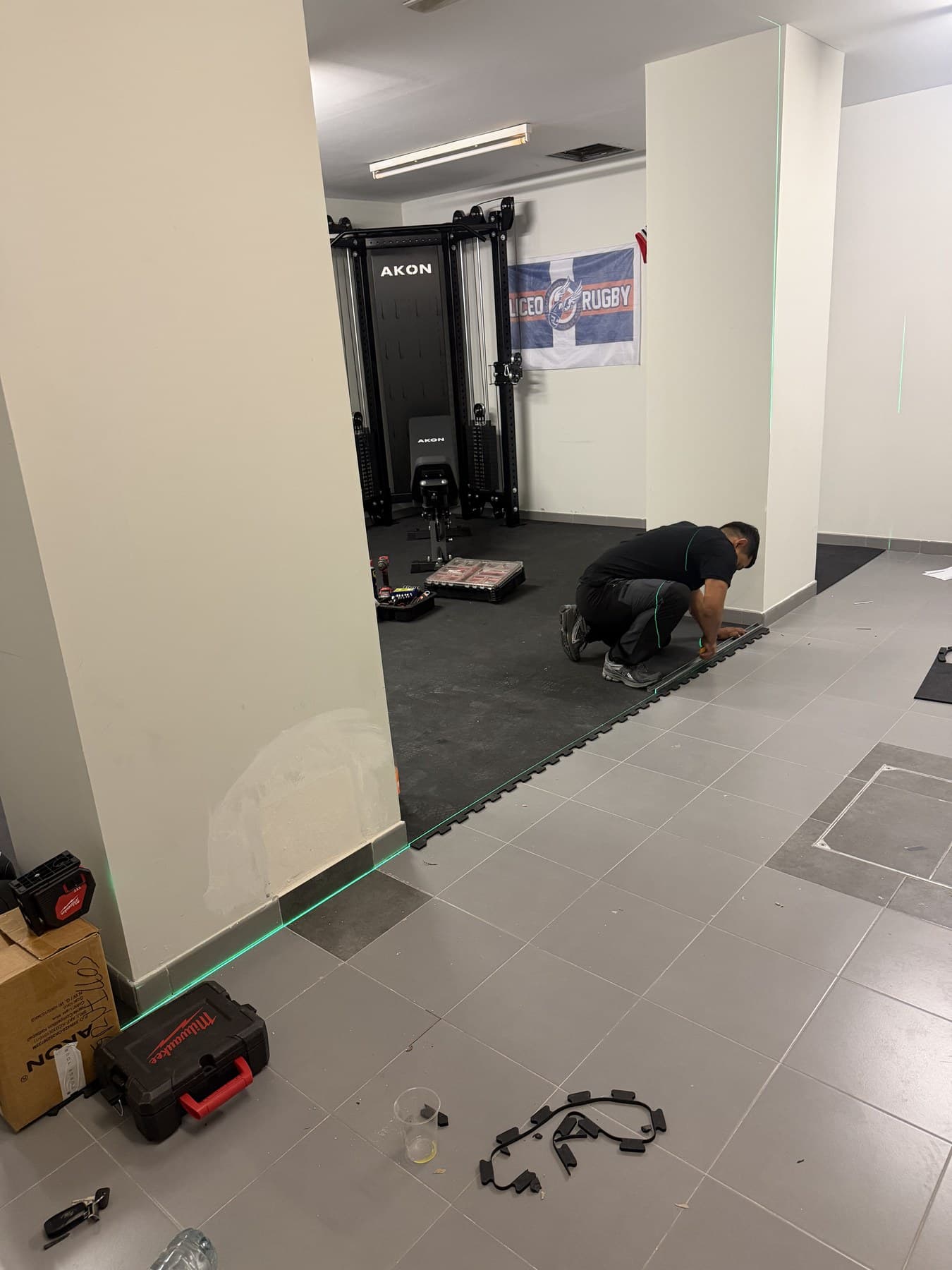
Uno de los errores más habituales al montar una sala de fitness es instalar el mismo grosor de loseta en toda la superficie. El suelo de la zona de cardio no tiene por qué soportar lo mismo que la zona de halterofilia.
Zona de cardio y musculación general
Con un uso de tránsito y máquinas fijas, una loseta de 10-15 mm suele ser suficiente. Aporta confort, reduce el ruido de pisadas y protege el forjado sin necesidad de un grosor mayor.
Zona de peso libre y levantamientos
Si en la zona se hacen lanzamientos de peso muerto o arrancadas olímpicas, el grosor mínimo recomendable sube a 20-30 mm, y en plataformas de competición puede llegar a 40 mm o más. El objetivo no es solo proteger el suelo: también amortigua el impacto para las articulaciones del usuario.
Zonas funcionales y crossfit
Los boxes de crossfit suelen combinar ambos mundos en el mismo espacio: carreras, saltos, lanzamientos de balón medicinal y levantamientos. Aquí es habitual instalar losetas de 20 mm en toda la sala y reforzar con losetas más gruesas o plataformas específicas en la zona de barra.
Qué pasa si eliges un grosor insuficiente
Además del riesgo de dañar el forjado, un grosor insuficiente se nota rápido: el caucho se comprime de forma irregular, aparecen marcas permanentes bajo las máquinas fijas y el ruido de impacto hacia otras plantas aumenta con el tiempo.
Nuestra recomendación
Antes de pedir presupuesto, define qué se va a hacer en cada zona de la sala. Nosotros medimos, replanteamos y proponemos el grosor adecuado zona por zona, no un único grosor para toda la instalación. Puedes ver más detalles en nuestro servicio de losetas de caucho.